The property journal
Terracotta Clay Roof Tile Defects and Inspection Risks
The short answer
GuideQuick overview
Concerned about the condition of an existing terracotta tiled roof?
- Terracotta clay roof tiles can appear serviceable from ground level while concealed cracks, deterioration and underlying problems create significant remedial risk.
- Before relying on a general visual inspection or pricing repairs, obtain an assessment from an experienced specialist roof tiler or professional building surveyor to define the defects, remedial scope and realistic cost.
Best for: main objective is to educate homeowners, property purchasers, property managers and building inspectors about the risks associated with terracotta clay roof tiles and why a general visual inspection may not be sufficient to establish the true condition of the roof.
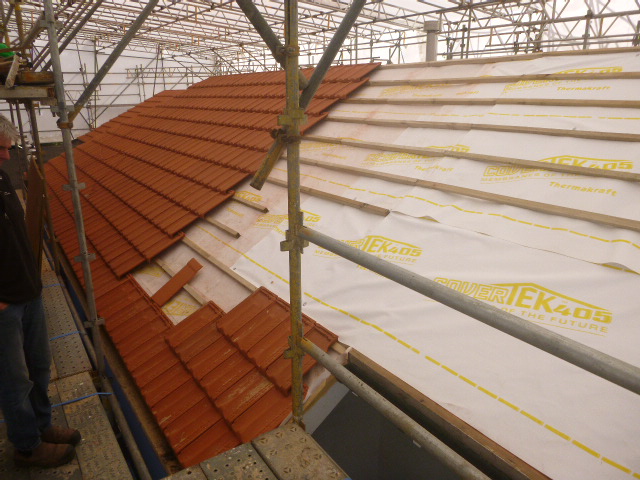
Terracotta Clay Roof Tiles – Visible Defects, Hidden Risks and the Importance of Specialist Investigation
Why identifying a defect is not the same as establishing the extent of remedial work
Terracotta clay roof tiles are a traditional roofing material valued for their appearance, durability and potential longevity. However, despite their reputation for durability, terracotta tiled roofs can develop a range of defects associated with ageing, weather exposure, material deterioration, installation practices and inadequate maintenance.
One of the challenges when assessing an existing terracotta tiled roof is distinguishing between identifying visible defects and establishing the actual extent of remedial work required.
A general visual inspection may identify cracked, damaged, displaced or deteriorating tiles. However, these observations do not necessarily establish whether the defects are isolated, whether additional damage is concealed beneath adjoining tiles, or whether the underlying roofing components have also deteriorated.
This distinction is particularly important when assessing older tiled roofs, where the visible condition may not accurately represent the overall condition or the extent of work necessary to restore the roof's weatherproofing performance.
For property owners, prospective purchasers, building inspectors and property professionals, understanding this limitation is essential when considering the potential cost and scope of roof repairs.
Common defects associated with terracotta clay roof tiles
Terracotta clay tiles can experience a variety of defects over their service life, including:
- Cracked and fractured tiles resulting from impact, foot traffic, thermal movement, settlement or age-related deterioration.
- Surface deterioration, including flaking, scaling, delamination and spalling.
- Damaged edges, corners and interlocking sections.
- Loose, displaced or incorrectly seated tiles.
- Deteriorated or inadequate tile fixings.
- Defective ridge and hip tile bedding, pointing and mortar.
- Defective valley, flashing and roof junction details.
- Deterioration of supporting battens and other concealed roofing components.
- Water ingress and consequential damage to underlying building elements.
Some of these defects are readily identifiable, while others may be difficult to detect without close examination or further investigation by specialist roofers or chartered building surveyors.
Importantly, the identification of one or more defective tiles does not necessarily establish the full extent of the underlying problem.
Why visible defects may not reveal the full extent of deterioration
Terracotta tiles are installed in overlapping courses, with each tile partially covering the adjoining tiles. This arrangement provides weather protection but also means that significant portions of individual tiles are concealed.
Consequently, cracks, fractures, damaged edges and deterioration may exist beneath the exposed portions of the roof covering without being readily apparent.
There are several additional factors that make assessing the condition of terracotta tiled roofs particularly challenging.
1. Defects may extend beyond the visibly damaged area
A visibly cracked or damaged tile may be an isolated defect, but it may also be indicative of wider deterioration affecting adjoining tiles or the surrounding roof covering.
Without closer examination, it may not be possible to establish whether the problem is localised or more extensive.
2. The condition of concealed tile sections cannot always be established visually
The exposed surface of a tile may appear relatively sound, while concealed sections, interlocking edges and underlying areas may contain cracking, deterioration or damage.
These conditions may only become apparent when selected tiles are carefully lifted or removed.
3. Underlying components may also be defective
The condition of the tiles alone does not determine the overall performance of the roof.
Fixings, battens, underlay and other supporting components may have deteriorated or become compromised. These conditions are not necessarily identifiable through an inspection of the exposed tile surfaces.
4. Water ingress may have occurred without obvious external evidence
Defective tiles, junctions or flashing details may permit water penetration beneath the roof covering.
The resulting damage may be concealed and may not become apparent until further investigation is undertaken.
5. Previous repairs may not have addressed the underlying cause
Previous replacement tiles, patch repairs or localised maintenance may have addressed visible symptoms without necessarily rectifying the original cause of the deterioration.
The effectiveness and adequacy of previous repairs should therefore be considered as part of the overall assessment.
The limitations of a general visual building inspection
A general building inspection can provide useful information about the observable condition of a terracotta tiled roof and identify defects requiring further attention.
However, there is an important distinction between reporting visible defects and undertaking the detailed investigation necessary to establish the actual scope of remedial work.
For example, an inspection may identify several cracked tiles, deteriorated ridge pointing or evidence of previous repairs. While these observations are useful, they do not necessarily establish:
- Whether additional cracked or deteriorating tiles are concealed beneath overlapping courses.
- Whether the defects are isolated or widespread.
- Whether adjoining tiles have been affected.
- Whether tile fixings remain adequate.
- Whether underlying battens or other supporting components have deteriorated.
- Whether water ingress has resulted in consequential damage.
- Whether localised tile replacement will be sufficient.
- Whether more extensive dismantling, reinstatement or roof restoration works will be necessary.
Accordingly, the presence of visible defects should not automatically be interpreted as a complete assessment of the work required to rectify the roof.
Equally, the absence of obvious visible defects should not be taken as confirmation that all concealed roofing components are in satisfactory condition.
Where the condition of the roof is uncertain, further specialist investigation may be warranted.
Why specialist terracotta roof tiler involvement is important
Establishing the actual extent of remedial work requires an understanding of the roofing material, its installation arrangement, the nature of the defects and the appropriate methods of repair.
An experienced specialist roof tiler familiar with traditional terracotta clay roofing is best placed to undertake this assessment.
Unlike a general visual inspection, a specialist assessment can involve closer examination of the individual tiles, their interlocking arrangements, fixing systems and associated roof components.
Depending on the condition and accessibility of the roof, the investigation may include:
- Closer inspection of individual tiles to identify cracking, fractures and surface deterioration.
- Checking for loose, displaced or incorrectly seated tiles.
- Examining concealed tile edges and interlocking sections where accessible.
- Assessing the condition and adequacy of accessible fixings.
- Inspecting ridge and hip tiles, bedding and pointing.
- Examining valleys, flashings, abutments and roof penetrations.
- Identifying potential sources of water penetration.
- Carefully lifting selected tiles to investigate concealed conditions where necessary.
- Assessing whether defects are isolated or indicative of more extensive deterioration.
The extent of investigation will depend on the agreed scope, accessibility and safe working requirements.
The objective is not simply to identify defective tiles, but to establish, as far as reasonably practicable, the extent of deterioration and the work required to address it.
Establishing the actual scope of remedial works
Once the defects have been investigated, the next step is to determine the appropriate remedial response.
This is where specialist input becomes particularly important.
A roof containing several visibly cracked tiles may initially appear to require only localised replacement. However, further investigation may identify additional defective tiles, inadequate fixings, deteriorated ridge bedding or other associated problems.
Conversely, some visible defects may be isolated and capable of straightforward repair without requiring more extensive work.
The appropriate scope should therefore be based on the findings of the specialist assessment rather than assumptions derived solely from the roof's external appearance.
Depending on the findings, remedial work may include:
- Replacement of individual cracked, fractured or deteriorated tiles.
- Replacement of additional defective tiles identified during closer inspection.
- Reinstatement and securing of displaced tiles.
- Replacement or repair of defective fixings.
- Repairs to ridge and hip tile bedding and pointing.
- Repairs to defective valley and flashing details.
- Replacement of deteriorated supporting components where required.
- Further investigation and rectification of concealed water ingress damage.
- More extensive dismantling, reinstatement or restoration where localised repairs are insufficient.
A properly prepared scope should identify the nature and location of the defects, the proposed repair methodology, the extent of replacement materials and any additional investigation that may be required.
Why accurate remedial pricing depends on establishing the scope
The cost of repairing a terracotta tiled roof cannot always be reliably established from photographs or a brief visual inspection.
While an initial budget estimate may be possible, accurate pricing requires an understanding of the actual work involved.
The cost may be influenced by factors including:
- The number and location of defective tiles.
- The availability and compatibility of replacement tiles.
- The difficulty of accessing affected roof areas.
- The extent of tile removal and reinstatement.
- The condition of existing fixings and supporting components.
- The extent of ridge, hip, valley and flashing repairs.
- The need for additional investigation.
- The possibility of concealed deterioration becoming apparent during the works.
Where the full extent of defects cannot be established before work commences, the scope and pricing should clearly distinguish between confirmed works, provisional allowances and potential additional work.
This provides a more transparent basis for assessing the likely cost and reduces the risk of underestimating the extent of the required repairs.
The importance of distinguishing between defect identification and remedial assessment
When assessing terracotta tiled roofs, it is important to recognise that there are effectively two separate stages.
Stage 1 – Identifying observable defects
This involves identifying and documenting visible damage, deterioration, displaced tiles, defective junctions and other apparent deficiencies.
This stage provides an indication of the roof's observable condition and identifies areas requiring further attention.
Stage 2 – Establishing the extent of remedial work
This involves further specialist investigation to establish whether the defects are isolated or more widespread, identify concealed deterioration where reasonably practicable, determine the appropriate repair methodology and prepare a sufficiently detailed scope for pricing.
These two stages should not be confused.
Identifying a cracked tile does not establish whether one tile or several courses require replacement. Identifying deteriorated ridge pointing does not necessarily establish the condition of the underlying bedding. Similarly, identifying evidence of water ingress does not establish the full extent of any concealed consequential damage.
The second stage is what provides the necessary technical information to move from identifying a problem to properly defining the work required to rectify it.
Conclusion – Establish the extent of the problem before pricing the solution
Terracotta clay tiled roofs can develop defects that are difficult to identify through general visual inspection alone. Their overlapping installation arrangement, concealed tile sections and associated supporting components can make it difficult to determine the true extent of deterioration without further investigation.
For this reason, identifying visible defects should be regarded as an initial assessment rather than confirmation of the complete remedial work required.
Where defects are identified, or concerns exist regarding the condition of an ageing terracotta tiled roof, an appropriately experienced specialist roof tiler should be engaged to undertake further assessment, investigate the extent of deterioration and establish the appropriate remedial methodology.
This specialist involvement is essential to preparing a properly defined scope of works and obtaining realistic pricing based on the actual requirements of the roof.
Ultimately, there is a significant difference between identifying what is visibly wrong with a terracotta tiled roof and establishing what is actually required to put it right. The latter requires specialist knowledge by professional specialist roofers or professional building surveyors, appropriate investigation and a properly documented remedial scope.
This article provides general information. What can be inspected depends on access, the property and the agreed scope. Speak with Nick about your property.
← All articles