The property journal
Buying a Plaster House in New Zealand: What to Check Before You Commit
The short answer
GuideQuick overview
A plaster finish alone does not tell you whether a house leaks. Before buying, check the construction, available records and inspection findings together. Ask about hidden areas, moisture-testing limits and any further investigation needed before your purchase deadline.
- Assess the individual building. Plaster cladding and age are reasons to ask questions, not a diagnosis.
- Ask about vulnerable junctions, decks, flashings and clearances, including areas the inspector cannot access.
- A visual inspection or low moisture reading cannot guarantee the condition of concealed framing.
- Request consent records, repair history and existing reports. Ask your lawyer which documents you need.
- Clarify recommended investigations and contractual deadlines before committing to the purchase.
- Send Nick the address, available reports and deadline so he can discuss the appropriate scope.
Best for: Home buyers considering a plaster-clad house, apartment or townhouse, particularly in Auckland and Waikato.
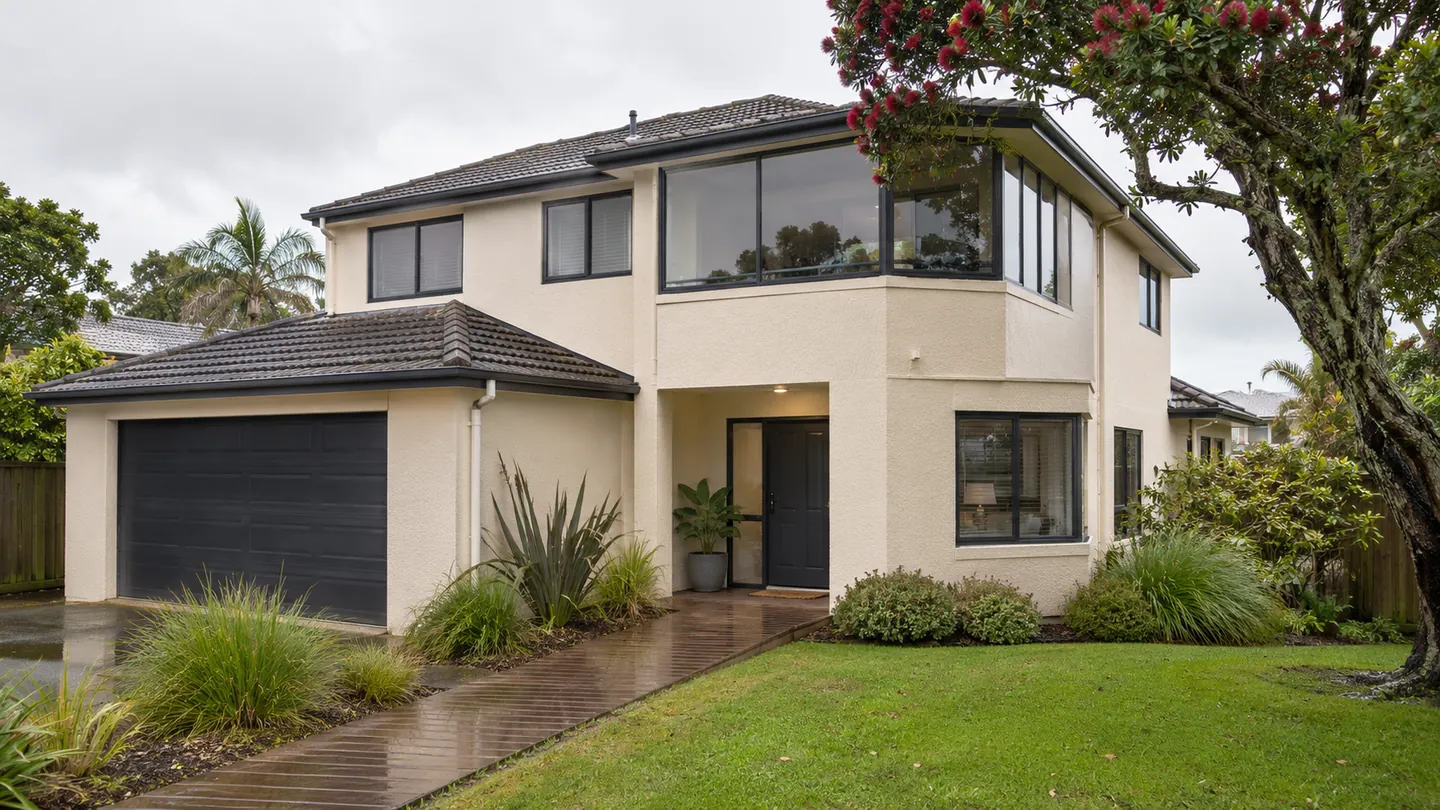
You find a house with the right layout, enough space and a location you like. Then someone says, “It’s plaster. Be careful.”
That is a reason to ask better questions. The useful question is what you can establish about this particular building before committing to it.
For buyers in Auckland and Waikato, that means looking at the construction, the records and the inspection findings together. Here is where to start.
Are all plaster houses leaky homes?
No. A plaster finish alone does not establish whether a house leaks. Settled.govt.nz identifies plaster-style monolithic homes from the late 1980s to the mid-2000s as a particular concern, while noting that other building styles can also have weathertightness problems.
“Plaster” describes an appearance, rather than giving you a complete account of the wall behind it. Ask the surveyor to identify the cladding construction as far as the available evidence allows. If a detail cannot be confirmed, have that uncertainty recorded.
A building’s age is useful background. It should not be treated as a pass or fail result.
Which features deserve a closer look?
Walk around the property with questions in mind. MBIE lists several details commonly associated with weathertightness problems, including roof-to-wall junctions, missing flashings, decks over living areas and inadequate clearances below cladding. Their presence does not, by itself, prove a leak.
A flashing is a detail that helps direct water away from a vulnerable junction or opening. Ask how those junctions have been assessed.
| Area | Useful question for the inspection |
|---|---|
| Windows and doors | Are there visible concerns at the junctions with the wall? |
| Roof and parapets | Which roof-to-wall details need closer assessment? |
| Balcony or deck | How have drainage and connections to the building been assessed? |
| Base of the wall | Are ground, paving or deck levels creating concerns? |
| Interior finishes | Do staining, swelling or musty smells warrant investigation? |
Treat this as a conversation starter. You do not need to diagnose the house yourself.
Can moisture testing tell you whether it is safe to buy?
Moisture testing can help investigate a concern. A reading on its own cannot settle the buying decision or establish the condition of all concealed framing.
A low reading is not a guarantee that a wall has never leaked. The method, materials, access and conditions matter. Castlebridge’s moisture-testing service explains how readings fit into the assessment and when further work may be needed.
Ask the surveyor three questions:
- Where were readings taken, and why?
- Which areas could not be assessed?
- What uncertainty remains, and what would help resolve it?
BRANZ Bulletin 559, published in April 2013, explains the limits of visual pre-purchase work: a report using only non-invasive equipment cannot guarantee weathertightness. A specialist investigation is a separate scope of work.
At Castlebridge, any invasive testing requires the owner’s permission and a separately agreed scope. Discuss that early if your purchase deadline is approaching.
If the property is going to auction, use our pre-auction inspection guide to plan the report and any follow-up before bidding.
What should you request from the seller?
Ask for the paperwork before the inspection where possible. A useful request list is:
- Available consented plans and specifications.
- The code compliance certificate and documents for subsequent building work.
- Records of any recladding, leak investigations or repairs.
- Available maintenance records, invoices and warranties.
- Previous building reports, with their dates and limitations.
Also ask the agent directly about known leaks, repairs and weathertightness concerns. Send the documents and answers to your surveyor and lawyer rather than trying to reconcile everything yourself.
MBIE explains that council property files can contain original drawings and specifications. A LIM is a different record of information held by the council. Your lawyer can advise what to obtain and whether the records answer your questions.
Does a CCC or a clear LIM remove the risk?
They are useful checks, but they answer different questions from a current condition inspection.
MBIE describes a code compliance certificate, or CCC, as confirmation that work carried out under a building consent complies with that consent. An older certificate does not tell you how every part of the building is performing today. Ask which work it covers.
There is also an important limit to the claims history in a LIM. MBIE says councils must identify Weathertight Services claims, but court or private claims do not have to be identified. An absence of recorded claims should not be read as proof that there have never been leaks.
Is the seller’s building report enough?
Read it, but check who commissioned it, when it was prepared and whether you are entitled to rely on it. Consumer Protection cautions that the vendor is the client when the vendor commissioned the report.
A standard visual report also cannot establish the condition of materials concealed behind finished surfaces. If a report recommends further investigation, that recommendation is an unanswered question to resolve.
For a plaster-clad property, explain the construction and any known concerns when arranging your pre-purchase building inspection. Ask whether the proposed scope is sufficient or whether a focused weathertightness assessment is appropriate from the outset.
If you are comparing inspectors, our guide to hiring a building surveyor in New Zealand covers qualifications, independence, insurance and written scope.
Buying an apartment or townhouse? Look beyond your own unit
The exterior may belong to a larger building or development. A tidy interior in one unit does not establish the condition of the wider complex.
MBIE advises that weathertightness inspection of an apartment or townhouse complex should consider the whole complex, rather than just the unit being purchased.
Ask your surveyor about the technical scope and your lawyer about relevant body corporate documents and your potential responsibilities. Castlebridge also handles multi-unit apartment and commercial-building due diligence; the scope is agreed for the property and the decision involved.
What if the report finds a problem?
Start by asking what is known and what still needs checking. A visible defect, an elevated moisture reading and confirmed timber decay are different findings.
Ask for a clear explanation of the concern, its significance and the recommended next step. If repair work is being considered, obtain suitably scoped advice and cost information before assuming an allowance will cover it.
Get legal advice before signing or acting on a purchase condition. MBIE’s contract guidance recommends appropriate inspection conditions and legal advice. Do not assume a report gives you an automatic right to cancel, renegotiate or extend a deadline. Your lawyer needs to advise on the actual agreement.
Your checklist before committing
Keep these six questions beside the report:
- Do I understand the construction and the main concerns identified?
- Do I know which areas were inaccessible or outside scope?
- Have recommended investigations been completed or properly considered?
- Have my lawyer and surveyor reviewed the relevant records within their respective roles?
- Have I checked finance and insurance requirements with the relevant providers?
- Do I understand the remaining uncertainty, any proposed work and my contractual deadlines?
If something important is unresolved, ask for an explanation before treating the due diligence as complete.
Discuss a plaster house with Nick before you book
Send the address, listing link, available reports, known concerns and the date by which you need to make a decision. That gives Nick a useful starting point for discussing the right scope.
Nick Roberts is a Chartered Building Surveyor, FRICS and a registered NZIBS member, with more than 20 years of construction experience across the UK and New Zealand. Castlebridge primarily serves Auckland and Waikato, including Hamilton. Other locations are considered by arrangement, with any travel fees discussed upfront.
Ask Nick about a plaster-house inspection, or call 022 354 3656. The scope, fee and availability are confirmed before booking.
The cover image illustrates a property type. It does not show a client property or a diagnosed building defect. This guide provides general information; the advice you need depends on the property and your proposed purchase.
Common questions
Should I avoid buying a plaster house in New Zealand?
A plaster finish alone is not enough to decide. Consider the individual building, records, inspection findings and any unresolved concerns with your advisers. Some plaster-style homes have elevated weathertightness risks, and other cladding types can also leak.
Does a plaster house with no visible dampness still need an inspection?
Yes. The absence of visible dampness does not establish the condition of hidden areas. Settled.govt.nz recommends an independent inspection or weathertightness expert for potentially vulnerable plaster-style buildings, because problems may not be obvious.
Will a moisture test show whether timber framing is rotten?
A moisture reading alone cannot confirm the condition of all concealed timber. A specialist may recommend further investigation. At Castlebridge, invasive testing needs the owner’s permission and a separately agreed scope.
How much does a plaster-house inspection cost?
Castlebridge quotes for each property and scope. Send the address, available reports, known concerns and your deadline. Nick will discuss the appropriate inspection or investigation, fee and availability before booking.
Can I cancel the purchase if the building report identifies concerns?
That depends on the sale and purchase agreement and the circumstances. Ask your lawyer about the relevant conditions, deadlines and options. A concerning report does not automatically give every buyer a right to cancel.
Can Castlebridge inspect plaster houses outside Auckland?
Castlebridge primarily serves Auckland and Waikato, including Hamilton. Other locations are considered by arrangement and subject to availability, with any travel fees discussed upfront.
Sources and further reading
- Settled.govt.nz — Learning about leaky buildings
- MBIE Building Performance — Signs of a leaky home
- BRANZ Bulletin 559 — Pre-purchase inspections (April 2013, PDF)
- MBIE Building Performance — What can the council tell you about the house?
- MBIE Building Performance — Code compliance certificates
- MBIE Building Performance — Checking for weathertightness problems
- Consumer Protection — Building reports and red flags
- MBIE Building Performance — Is a pre-purchase building inspection advisable?
- MBIE Building Performance — Getting the contract right
This article provides general information. What can be inspected depends on access, the property and the agreed scope. Speak with Nick about your property.
← All articles